


May. 19, 2026
Forget Big Apps. These Tiny Tools Are Making Millions

Oct. 05, 2025
He Makes $3M/Year From Tiny AI Tools (Here’s How You Can Too)

Sep. 19, 2025
My AI agents scrape Google Maps to make $$ in BORING businesses

Jul. 28, 2025
n8n Full Course: How to Build Custom User Interfaces (Step-by-Step)

Jul. 23, 2025
Complete Guide to Making Money with MCPs
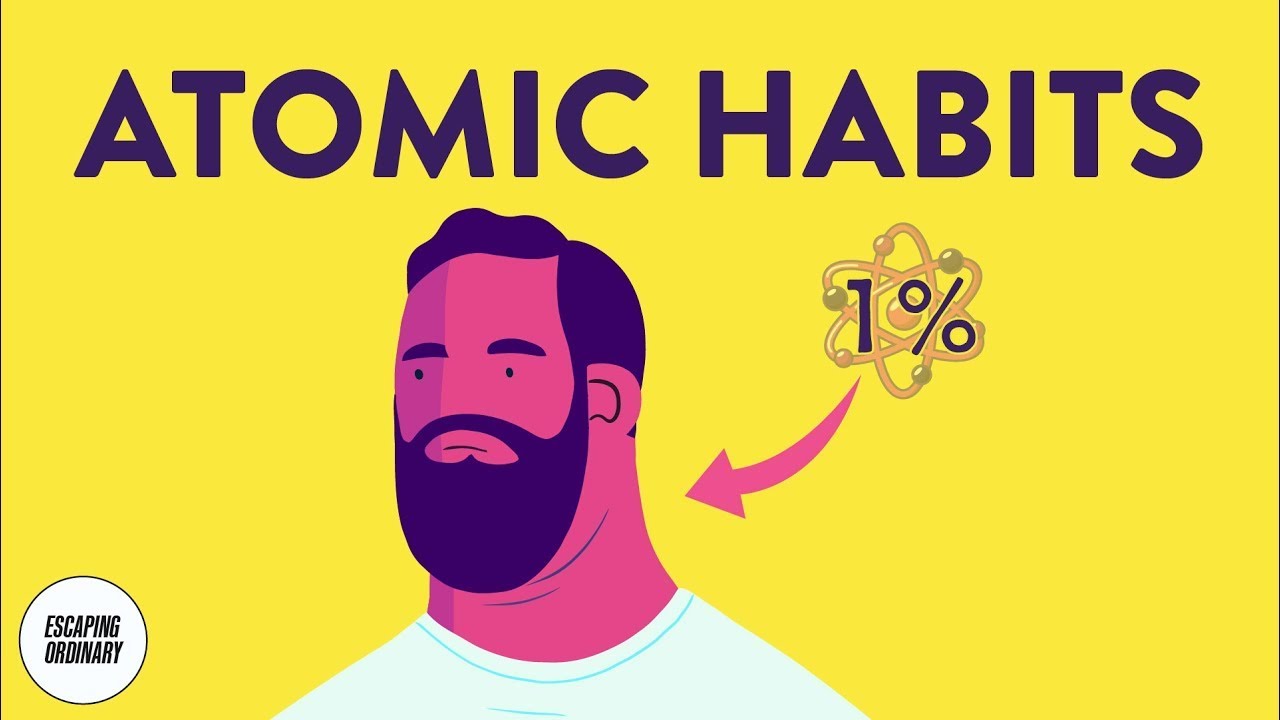
Atomic Habits can help you improve every day, no matter what your goals are. As one of the world’s leading experts on habit formation, James Clear reveals practical strategies that will help you form good habits, break bad ones, and master tiny behaviors that lead to big changes.
If you’re having trouble changing your habits, the problem isn’t you. Instead, the issue is with your system. There is a reason bad habits repeat themselves over and over again, it’s not that you are not willing to change, but that you have the wrong system for changing.
“You do not rise to the level of your goals. You fall to the level of your systems” – James Clear
I’m a huge fan of this book, and as soon as I read it I knew it was going to make a big difference in my life, so I couldn’t wait to make a video on this book and share my ideas.
Here is a link to James Clear’s website, where I found he uploads a tonne of useful posts on motivation, habit formation and human psychology.
If you liked this summary and you want to go deeper into Atomic Habits, here is a link to the book (Nothing Beats the book!)
📕Atomic Habits by James Clear –
If you are more into Audiobooks, here is a link to that. You can get this audiobook for free if you sign up for a free Audible trial with the link below.
🎧Grab Atomic Habits audiobook on an Audible trial with 2 free books –
🗎If you want to help out my channel, please consider grabbing the PDF mindmap and illustrations I made to go along with this summary –
Lessons you will learn from reading Atomic Habits
• How to make time for new habits ;
• How to overcome a lack of motivation and willpower;
• How to design your environment to make success easier;
• How to get back on track if your habits break down
• How to overcome the plateau of latent potential
★★★ TIMESTAMPS ★★★
00:00 Introduction
01:32 Atomic Habits
07:15 Law 1 – Make it Obvious
11:06 Law 2 – Make it Attractive
15:38 Law 3 – Make it Easy
18:13 Law 4 – Make it Satisfying
21:35 How I personally use this book
Here are some of the other summaries and non fiction book recommendations you can find on this channel
The Laws of Human Nature (Detailed Summary) –https://youtu.be/uhWzVdGmX2w
The 7 Habits of Highly Effective people (Detailed Summary)
The Four Agreements (Detailed Summary)
Limitless by Jim Kwik (Detailed Summary)
Rich Dad Poor Dad | (Detailed Summary)
Here is another good summary of this book by Ali Abdaal –
Thankyou for watching this animated summary of Atomic Habits. Please Subscribe 🙂
Do you ever feel like you’re just floating through Life…but not actually getting closer
to the person that you want to be. It usually happens around New years, you imagine
all the bad habits your going to break free from, And all the good habits you will begin. “This time it will be different”
you say to yourself. This time I AM going to do the things that I say I will. Only to end up back where you began shortly
after and no closer to what you had envisaged. So the question is, how do you become the person
you dream of becoming? How do you break free From bad habits and make the habits
you desire easier and automatic? Atomic Habits by James Clear
answers all these questions. We are going to be doing a detailed visual summary
of this book, And dive deep into topics like Habit loops
Dopamine spikes Priming your environment
Plus heaps more And make sure to stick around until the
end of the video where we tie everything Together from the video and I go step by
step through how I’ve personally been using This book with my own habits and how you
can start applying it to your own habits. I hope this summary inspires you to go out
and grab a copy of the book for yourself Because this book deserves a
space on everyone’s bookshelf! Let’s jump into it Imagine a plane taking off and
travelling from New York to Los Angeles. Just before takeoff you adjust the
plane just slightly by 3 degrees Or around 80 inches. If you kept flying in
a straight line…You would end up closer To Tijuana in Mexico than in your
intended destination of Los Angeles. The same goes for our habits.
Tiny changes in our habits Can change the trajectory of our lives
in ways that we can’t even notice Until many years into the future looking back.
In both good ways and bad. You are your habits. The Power of Atomic Habits “A slight change in your daily habits can guide
your life to a very different destination”. Massive action Vs 1% improvements Far too often, we convince ourselves that massive
success is only possible through massive action In any goal we are pursuing. We expect
ourselves to make some quantum leap or Momentous improvement that
will gain others attention. However it is the tiny improvements,
that aren’t even noticeable at first, That create incredible change.
Let’s look deeper into the Math 1% better every day for a year will
compound to nearly 38 times better. 1% worse every day for over a
year will bring you close to zero! Your habits can compound against you in the form
of things like stress or negative self-talk. Or they can compound for you in
the form of things like knowledge, Productivity, skills and relationships. “Success is the product of
daily habits—not once-in A lifetime transformations” The Truth About progress When you start any endeavour in your life, here
is what we think should happen. Linear progress. Here is what actually happens. Notice
this section here. In the beginning, Small changes in our progress
are not even noticeable. James Clear refers to this part of the
graph as “the valley of disappointment” You’ve done so much! Put in so much
effort and you can barely see any results! This is where most people fail and
slip back into their old routines. The most powerful outcomes of any compounding
process are delayed so Patience is required. Goals Vs Systems. “ FORGET ABOUT GOALS, FOCUS ON SYSTEMS INSTEAD” A goal is the result you want
to accomplish. Systems deal With the processes that lead to results. The conventional wisdom suggests that the best
way to achieve anything we want in life-getting Into better shape, building a successful business, Spending more time with family is
to set specific, realistic goals. But if you completely ignored your
goals and focused only on your system, Would you still succeed? The Author argues that you would. Here are some problems with only having goals.
Successful and unsuccessful people share the Same goals, so therefore the goal can not
be what differentiates winners from losers. Achieving a goal only changes
your life for a moment in time. Goals can create an either-or conflict.
Either you achieve the goal and succeed, Or you don’t and you are a failure. Even if
you were making progress in the right direction When you achieve a goal, what do you do after?
If your goal was running the local marathon, Chances are after completing it,
your motivation will quickly fade And you will just slip back
into your old routines.
“Goals are good for setting a direction,
but systems are best for making progress” A SYSTEM OF ATOMIC HABITS The problem with changing your habits is not you.
The reason why you repeat the same bad habit for So long isn’t because you don’t want to change,
but because you have the wrong system for change. Atomic habits are small routines and behaviors
that accumulate to produce incremental positive Outcomes over time. Big breakthroughs tend to
get more attention than small improvements. But what really matters are the little
daily decisions and actions we take. “Just as atoms are the
building blocks of molecules, Atomic habits are the building
blocks of remarkable results”. There are 3 layers to behavior change. The first layer is changing outcomes.The
result. Losing that weight, writing that book, Winning the season. The outcomes are what you get The Second layer is changing
your process. What you do. The new workout routine,
developing a daily reading habit. And the third layer is changing
your identity. What you believe. Your worldviews and how you
think about yourself and others. Most people focus on the outcomes but
the best way to change your habits Is by focusing on the person you want to
become instead of the results you want. The goal isn’t to learn an instrument,
it is to become a musician. The goal isn’t to run a marathon,
It is to become a runner. When something you want in your
life becomes part of your identity, That is when your behaviors will naturally change. When you tell yourself and others “I’m a
runner”. You want to live up to that identity. Remind yourself Every Time you do a workout, you are an athlete. Every time you write a line
of code, you are a coder. Each time you instruct your
team, you are a leader. The Habit Loop A habit is when Something has been repeated enough
times that it becomes automatic. Ultimately we want our habits to solve problems
in our lives with the least amount of effort. A habit is formed and reinforced by
means of a continuous feedback loop: Cue + Craving + Response + Reward.
The key to creating habits that stick Is to create feedback loops that
are continuously being improved. Cue. Phone buzz. Craving.
Want to know who messaged.
Response. Pick up phone. Reward.
Solve the problem of who messaged. Cue. Mind goes blank at work. Craving.
Want to alleviate the frustration. Response. Check social media. Reward.
Satisfied the need to feel less frustrated Over time, rewards become associated with cues. So, in this example, checking social media
becomes tied to your mind going blank at work. And then checking Facebook may be the cue to check
Instagram, which becomes the cue to check YouTube. And before you know it, your mind going blank
cue has led to 20 minutes of wasted time. And you more you repeat these habit loops,
the stronger and more automatic they become. Cues can really be anything. A smell, a
sound a sight, a person, a location etc. Try to think of any cues in your daily life that
are initiating your good or bad habit loops. So how can we influence the
habit loop to work for us? This book shows us the 4 laws that
will guide us to do just that. Law 1 Make it obvious Most of your current habits are so automatic that
you don’t even realize them. You must first become Aware of your habits before you can change them.
You can achieve that with your Habit Scorecard. Write down all your daily
behaviors on a habits scorecard, From the moment you wake up
until the moment you go to bed. Your scorecard may look something like this. Based on whether it helps you
become the person you aspire to be, Categorize each habit as positive
(+), negative (-), or neutral (=). At this stage we aren’t trying to change anything, Just observe what is actually
going on in our daily lives. “Until you make the unconscious conscious,
it will direct your life and you will call It fate.”
Carl Yung Vagueness is a real problem when it comes to habit
formation, and studies have shown that quite often The reason people fail to stick to a habit
is not because of a lack of motivation, But because of a lack of clarity. “One day, I
will get into shape” is easy to say to yourself But too vague to get any momentum.
What you need is a time and a place. The most common cues—time and
location—will help you achieve your goals. Clearly state your intention to
act using the following formula: I will behavior at time in this location. Here is a bad example, “I will read more this month” Here is a good example
“I will read a book for 15 minutes
daily at 6am in the spare bedroom”. Another good way to get a habit
started is by Habit stacking.
To stack habits, tie a desired habit to an
existing habit according to the following formula: “After [current habit], I will [new habit]”. For example, “After I brush my teeth, I
will stretch for 5 minutes”. You can stack habits together, for example
after you finish brushing your teeth, You will meditate for 10 minutes, then plan the
rest of your day, before checking social media. A “chain of habits” is more likely to be
sustained if you practice this consistently. Choosing the correct trigger is
essential. YOU NEED A TRIGGER CUE Your trigger should be; Something that you do automatically
without fail during your day, Such as waking up, turning off
your alarm or brushing your teeth. James Clear tells us in the book
that Motivation is highly overrated. You can better shape your behavior
by designing your environment. We are more influenced by our environment
than our willpower or motivation. It’s hard to stick to positive
habits in a negative environment. “Environment is the invisible hand
that shapes human behavior.” Creating a habit requires you to redesign
the space around you (home/work) to 1 – make it easier to see the
cues for the desired habits and 2 – avert bad habits by making them invisible. If you want to drink more water, make the cues
visible and obvious. Place water bottles around The house in places you are likely to see them.
Want to read more? place the book somewhere you Will see it. If you want to get better on the
guitar, don’t leave it out of sight in a closet. CONTEXT IS THE CUE Objects in the environment do not determine our
behavior; rather, it is our relationship to them That does. Stop seeing your environment
as a place simply filled with objects. Imagine it as a place filled with relationships.
The couch in the living room is the place where One person reads an hour a night. For another, the
couch is where they watch Netflix and eat pizza And relax after work. If your relationship
with the couch is a place to relax, Then trying to get a work related task
done in that environment may be difficult. Try to make separate zones in your
house for different activities. The author likes to use the
mantra “One space, One use” If you are trying to eliminate a bad habit, You
can only rely on self-control in the short-term.
Cutting off bad habits at the source is a more
reliable solution and one of the most practical Ways to eliminate a bad habit is to make it
invisible. Eliminate it from your environment. For example Put your phone in another room for a few
hours if you have trouble getting work done. Put junk food out of sight or remove it from
your house if you are trying to lose weight. Law 2 Making it Attractive When we expect to be rewarded, we take
action. The more rewarding an action is, The more likely we are to repeat
it until it becomes a habit. Hence, the first step to forming good
habits is to make them more attractive. Understanding how dopamine
affects your body will help you DOPAMINE & FEEDBACK LOOPS Our motivation levels are affected by dopamine,
a hormone and neurotransmitter. We are more Motivated to act when our dopamine
levels rise. By measuring dopamine, Scientists can pinpoint the exact moment at
which a craving occurs. It was once assumed That dopamine was just about pleasure, but now we
know it’s vital to many neurological functions, Including motivation, memory, learning,
punishment as well as voluntary movement. “Gambling addicts have a dopamine spike right
before they place a bet, not after they win”. Let’s dive deeper into dopamine spikes. Using social media, eating junk food
and taking drugs are all associated With high levels of dopamine
and are highly habit forming. The hormone dopamine is released not
only when we experience pleasure, But also when we anticipate it.
Think about before going on a vacation. Sometimes the thinking and anticipation of the
vacation is better than the actual vacation. Seeing the junk food you desire
surges dopamine, not after eating it. Drug addicts increase dopamine when they
see the drugs, not after taking them. The craving is what causes us to
take action in the first place. Making our habits attractive is vital because
it is the expectation of a rewarding experience That drives us to act. Here, you
can use a strategy known as…. Temptation bundling The temptation bundling process makes a habit more
attractive by combining an action we need to do With one we want to do. For example
you could bundle watching Netflix (something you want to do) with
working out (something you need to do). Temptation bundling applies a psychology
principle known as Premack’s Principle.
Developed by professor David Premack,
the Premack principle states, “More probable behaviors will
reinforce less probable behaviors.” In other words, even if you’re not
looking forward to doing some exercise, You’ll become conditioned to do it because
you get to do something else you really enjoy. Group Influence “We are continually wondering “What will others Think of me?” and altering our
behavior based on the answer.” We are influenced by the people closest
to us, and the groups we belong to. If you are trying to build a new habit,
one of the best ways to reinforce the habit Is to find and become part of a
culture where that habit is the norm. If you want to get into better shape,
surround yourself with fit people. If you want to read more, join a book club. Primal motivators : The source of cravings In your normal everyday life you
wouldn’t say something to yourself like “I want to eat this pizza because I
need to consume this food to survive” Surface level cravings are merely
manifestations of our deeper underlying motives. And these underlying motives guide our behavior. Here are some examples of underlying motives: Conserving energy Obtaining food and water
Finding love and reproducing Connecting and bonding with others
Winning social acceptance and approval Reducing uncertainty
Achieving status and prestige Your brain did not evolve with a desire to smoke
cigarettes, check Instagram every 5 minutes or to Play video games. Online platforms and products
do not invent new motivations, but rather appeal To the underlying motives of human nature
that we already have to gain our attention. “Your habits are modern-day
solutions to ancient desires. New versions of old vices. The underlying
motives behind human nature remain the same” People who have the underlying motive of
connecting with others may jump onto Facebook, Others seeking the underlying motive of finding
love and reproducing may sign up for Tinder. Reducing uncertainty, there’s Google for that.
Seeking social acceptance, there is Instagram. Reprogramming your brain to enjoy hard habits “You can make hard habits more attractive if you Can learn to associate them
with a positive experience.” By highlighting the benefits of a
habit rather than its downsides,
You can quickly reprogram your mind and
make it seem more appealing. For example, Fitness = health and wellbeing and not fatigue. Cleaning the house = an environment conducive
to peace of mind and not wasted time. Saving money = future financial
freedom and not sacrifice. These subtle shifts in mindset
aren’t magic, but they can Change your feelings toward
some habits or situations. Make it Unattractive. To break a bad habit, do the same but
highlight the benefits of NOT doing that habit To make it as unattractive
to keep doing as possible. Law 3 – Make it Easy How long does it actually
take to form a new habit? During habit formation, a behavior becomes
increasingly automatic as it is repeated. As You repeat an activity, your brain changes
in order to become more efficient at it. Long before neuroscientists dug
into the process of forming habits, Repetition was known as a powerful tool for
establishing habits. You activate particular Neural circuits associated with habits
every time you repeat them. So framing habit Formation in terms of time is flawed. It should
be framed in terms of the number of repetitions. Reducing Friction : The Law of Least Effort The more energy required, the less likely it is
to happen. It takes almost no energy to get into The habit of reading one page of a book each
day. Habits are more likely to occur when they Require less energy. The bigger the obstacle,
the more friction there is between you and the Desired outcome. If you need to travel 20
minutes out of your way to go to the gym, Chances are you will not. If your gym is located
on your commute to work, you will greatly decrease The friction. By making your good habits more
convenient, you’re more likely to stick to them. Your life will be easier if you
find ways to reduce friction Rather than trying to solve it. In order to build
better habits, we have to find ways to reduce Friction associated with our good habits and
increase friction associated with our bad habits Prime the environment for use By automating or setting up your environment,
you can reduce the friction for future action, E.g. “I will lay out my workout clothes at night
so I can get up and get moving in the morning.” Or to prepare a healthier breakfast,
place the pan on the stove, And gather the ingredients the night
before. Again to reduce any friction. Using the Two-Minute Rule to Stop Procrastinating Using the “2-minute rule” can help you
establish small habits that will lead
To habit momentum and success in bigger goals. Find a simple, 2-minute version of your desired Habit. You want to scale down your desired
outcome. Running a marathon becomes putting On your shoes and stretching for 2 minutes.
Reading an hour per day becomes reading one Page. You need to get the routine anchored in
place and then slowly build up the difficulty. After you have mastered the 2-minute
habit, you can progress to the next phase; To make something more difficult, Think about ways you can create barriers of
friction between yourself and the bad habit. Make it as impractical as possible. If you want to watch less TV,
unplug the TV after each use And put the remote in an inconvenient location. When you go shopping, leave your
credit cards under the seat of your car If you have a bad habit of spontaneous spending. Do anything you can to make your
Bad habits less likely to occur. Law 4 -Make it satisfying The most important rule of behavior change A feeling of pleasure is a message to the brain: “This feels good. Let’s repeat this next
time.” When you experience pleasure, Your brain learns that a behavior
is worth remembering and repeating. “What is immediately rewarded is repeated.
What is immediately punished is avoided”. The first Three habits increase your
chances of doing the habit this time. The last law increases your chances
of repeating the habit next time. The Mismatch between immediate and delayed returns It is common for us to feel good about
our immediate results, but bad about Our long-term outcomes when we practice bad
habits. It is the opposite with good habits: The immediate result is unpleasant,
but the ultimate outcome is satisfying. A certain amount of success in
just about every field involves Ignoring an immediate reward for a long-term one. It is best to add a little immediate pleasure
to the habits that will pay off in the long run And a little pain to those that won’t. How to stick with good habits everyday QUOTE
“The vital thing In getting a habit to stick is to feel
successful—even if it’s in a small way. The feeling of success is a signal that your habit
paid off and that the work was worth the effort.” It is satisfying to make progress, and you can
monitor your progress using visual measures,
Such as moving paper clips, hairpins, or
marbles. These “little wins” can go a long way. For example, for each sales call you make today,
move a marble from one jar to the complete jar. For Each 25 minutes of writing, move a paperclip Visual measurements can take
many forms: diet journals, Workout logs, download progress
bars, or even page numbers in a book. Keeping a habit tracker may be the
best method to monitor your progress. Using a habit tracker is a simple way to determine
whether you did a particular habit. How to recover quickly when your habits break down In spite of your best efforts, it is inevitable
that life will interrupt you at some point. A bad day at work, a bad performance,
or a bad workout can happen to anyone. When you’re having a bad day, you don’t
realize how valuable it is to just show up. “Lost days hurt you more than
successful days help you.” Don’t break the chain of continuity. Missing twice
is the start of a bad habit; never do it. On a bad Day, it’s better to do 10 sit ups (instead
of your normal 50) than not do them at all. Breaking a bad habit: Make it Unsatisfying How an accountability partner
can change everything. A behavior is less likely to
occur when pain is immediate. Being held accountable by a partner is a good
way to keep your desired habits in check. We all want to be liked and respected, so
we would rather just avoid the punishment. For example – I owe you $10
every time I miss a workout, Plus the respect I lose for
failing to do what I said I would! Behavior is more likely to be influenced
by concrete, and immediate consequences. The Habit Contract You can create a habit contract
to hold yourself accountable, Just as governments use laws
to hold citizens accountable. You can create a habit contract either
verbally or in writing, which makes it Clear that you will honor a particular habit and
that there will be punishments if you do not. You can then use your accountability
partners to enforce that contract. Ok so it’s one thing to read a book, but
another to actually apply it to your life. So i’m going to try and visually
represent how I have personally Been using this book to build systems
around my habits the past few months. After you read the book maybe your approach will
be different than mine or better, or maybe there Are some parts I completely missed or could
improve upon so do let me know in the comments. The Good habits I wanted to develop were
more consistent workout and reading routines.
The Bad habit I wanted to eliminate was becoming
distracted and overconsuming social media First I completed the Habit scorecard. This gave
me a good idea of habits I could try to eliminate, But more importantly it gave me
an idea of daily habits I was Already doing that I could
stack my new habits with. Ultimately, when you find the habits you
want to work on. you want to be pushing Desired good habits towards this side of the
spectrum, and bad habits towards this side. For the working out habit. The first step was to make the cues more obvious,
and I had a few tools I could use from the book. In this case I used what James Clear
calls the implementation strategy. I will workout at 6am in the living room. Next I tried as best I could to design my
environment conducive to this new habit. I took my dumbbell set out of the
closet, and put them in the living room. I also found a few pictures of
healthy physiques on the internet And put them in places around the house
as cues that would remind me of the habit. Next, I moved on to the craving phase. To increase dopamine and motivation I
bundle the workout with listening to Some of my favorite podcasts. I also implement
reprogramming my brain. I tell myself repeatedly I don’t “have to do a workout” but that “ I
get to build strength and a healthier body” That subtle shift in mindset has gone a long way. Ideally, joining a gym, or finding a
group to workout with would be even better To strengthen this habit,
but unfortunately all gyms Are closed where I live, so I’m kind of
on my own for now with these two tools. Next, making it easy. Using the 2 minute rule, to make
sure I don’t end up like most people Starting a new habit, that
try to do too much too soon. I want my habit to not feel like a challenge
at all. My 2 minute rule was putting on my Workout clothes and stretching. If that was the
only thing I accomplished then that was fine, Because I showed up. But you will quickly find
that once you are there, you are now motivated to Get the workout done. It is weird but the
motivation seems to come after you get started. My mindset is focused on small 1 percent
changes compounding into meaningful results AND that my systems will get me to the results,
not vague goals. Remembering that my main focus At this point is just making sure I show
up and start anchoring this habit in place. Once you are consistently showing
up, increase the progression. To decrease friction, I made the rule
that I’m not allowed to check my phone
Until the workout was complete. If I get
distracted by emails or social media, It is one excuse and one step of friction
between myself and the workout getting completed. Lastly, this was a game changer for me,
priming the environment. When I place my shoes, Yoga mat and dumbbells out the night before I
skyrocket my show up and workout percentage. As soon as I place these
items out the night before, I feel like the ritual has begun and the workout
is already complete because I have zero excuses. So with those 3 phases of the loop
systemized to get me to show up. I only had the last phase of the loop left to
tackle. To make sure I keep repeating the habit. I use both of these tools somewhat
together to close out the loop. I use a habit tracker, crossing the
day off the calendar becomes the reward And it forces me to not want to break
the chain. I also take a of picture of The calories I burnt and send the picture
to my partner, and that feels satisfying. Mindset wise, I begin with identity and I
remind myself after each workout that “I Want to become the kind of person that enjoys
fitness and doesn’t miss workouts” I don’t Put all my focus on outcomes such as I want
to be 10kg lighter by such and such a date. I also remind myself that I need to
be patient for results and that I’m Probably still somewhere in this Valley of
disappointment before I will see results! So that is my personal
system for morning workouts. I went through the same process with the
reading habit, with a few minor changes. I used the habit stack. After [making
a coffee] I will [read for 90 minutes] … making a coffee was my trigger cue for reading. My one space one use rule was reading on
the balcony of my apartment. One of the best parts of my day
is a nice cup of coffee in the Morning. So this was the perfect
thing to bundle the habit with. Remembering how dopamine raises in anticipation
of a reward and not the reward itself. I wanted This dopamine spike for wanting coffee to
start becoming associated with reading. My 2 minute rule was to read 1 page of The
Daily Stoic by Ryan Holiday. Super simple, Again in the beginning all I was concerned
with was showing up and getting this habit Anchored. Then I slowly built up
the habit to around 90 minutes. For the bad habit I was trying to eliminate To make the habit invisible, I started
by making my phone as boring as possible, Which required deleting a lot of apps. I use the reprogramming tool, to
highlight the unattractive side of Overconsuming social media. Telling myself
things like… … consuming is the easy and
Lazy option of the masses ,producing
things is difficult but rewarding. Do I Want to be a consumer or a producer? Random
scrolling through feeds is for losers. So Try to paint your bad habit in a light that
makes it super unattractive to keep doing. To increase friction, I left my phone out of
sight whilst working in a drawer in another room. To make it unsatisfying, I have an accountability
partner, I get my partner to enforce this Habit. The punishment is If she sees me using
social media during work time, I owe her $10. So that is how I have been using this
fantastic book guys with great results So far, and I hope this summary has helped you to
better understand the concepts within this book. Go out and grab a copy of this book if you
haven’t already, you are going to take in the Knowledge at a much deeper level, from all the
stories and examples that James Clear goes over Some advanced techniques, not in this summary
that will help you strengthen your habits. Thankyou for watching. See you in the next video.